A useful keyword describes something you genuinely offer and fits what the visitor is trying to do. Plan the right page for that need, then write naturally.
- Start with your actual services
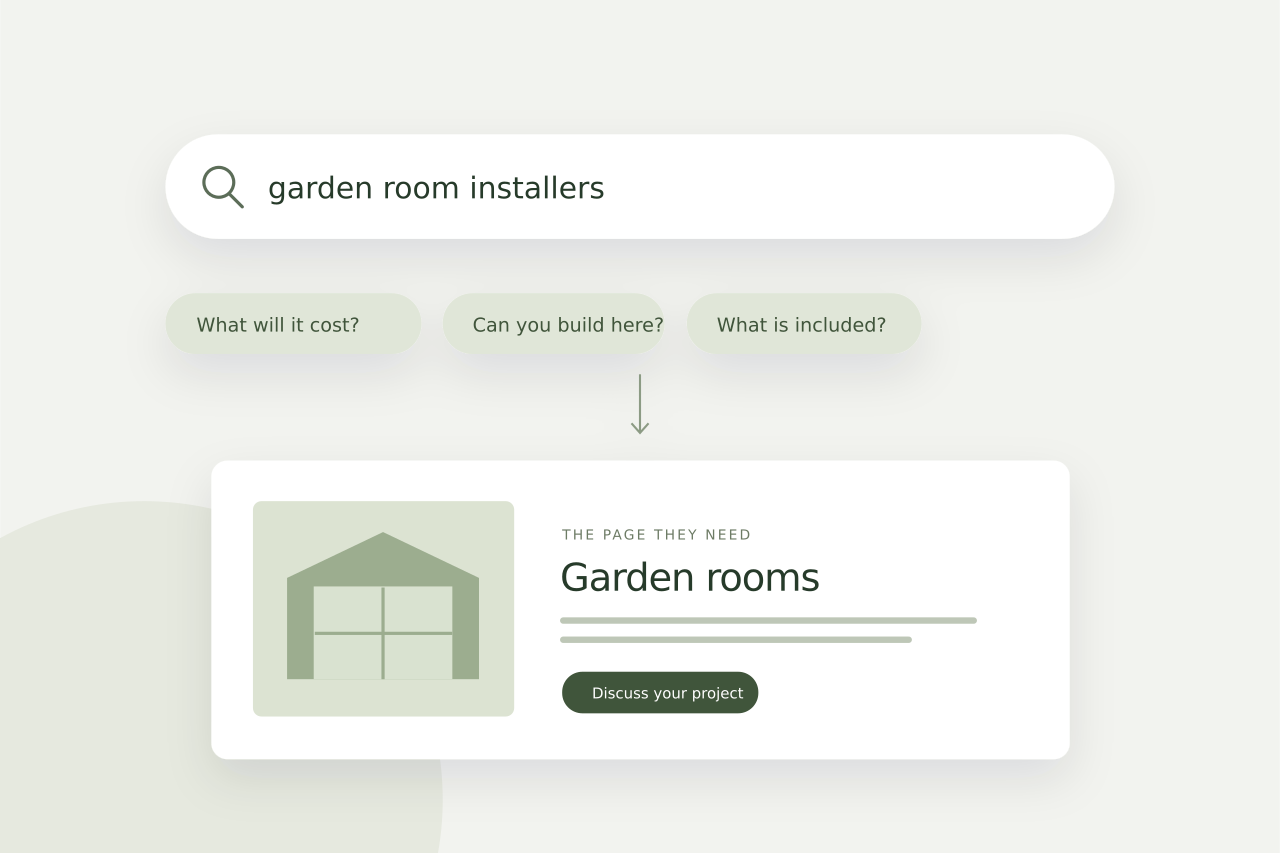
- Match each search to a useful page
- Use evidence, not guesses alone
Start with your actual services
List the services you want customers to find and the words people use when they enquire. Include straightforward names as well as specialist terms where they are relevant. A useful phrase should describe something you genuinely provide.
Look at the difference between someone researching a subject and someone looking to hire a provider. Those visitors may need different information and different pages.
Take ten recent customer questions and highlight the words people repeat. These are useful starting ideas, not proof of search demand. Compare them with the terms you use on your own pages.
Match the search to a useful page
Give each important service a clear place on the website. The page title, main heading and supporting content should describe the same subject in natural language. A title that promises one thing and a page that covers something else will disappoint visitors.
Avoid creating near-identical pages just to target small variations of a phrase. Plan pages around a real service, a distinct customer need or information that deserves its own explanation.
Example phrases only. Check relevance and demand before deciding what to create; not every phrase needs a separate page.
Use locations where they help
If you serve a particular area, explain that accurately. Give customers useful information about your location and coverage. A local phrase belongs where it helps somebody decide whether you can serve them.
You do not need to force every surrounding town into every heading. Useful local content should explain the service and the area rather than repeat place names.
Explain where you work and any practical limits. If you create an area page, give it useful local detail rather than swapping a town name into the same paragraph.
Check the evidence
Search Console can show queries and pages that already bring visitors to an existing website. Customer conversations, enquiry emails and the wording on relevant search results can also help you understand the language people use.
Treat keyword-tool estimates as context, not a guarantee of traffic or enquiries. Relevance to the business and the information on the page matter more than selecting a phrase solely because an estimate looks large.
A sensible first review
- List your core services and the phrases customers use for them.
- Check which relevant queries already appear in Search Console.
- Match each important customer need to an existing or planned page.
- Check that the title, main heading and page content tell the same story.
Keep reviewing what visitors need
Watch which pages receive useful enquiries and whether customers repeatedly ask questions that the website does not answer. Improve the information and structure as the business changes.
Search visibility is an ongoing process. A clear title and description are a starting point; the page still needs useful content and a reliable experience.
Put it into practice
Read Google’s SEO Starter Guide for the underlying principles, or discuss the structure of your website through custom website design.
The search guidance here follows Google’s SEO Starter Guide and its advice on clear, descriptive page titles. Neither a keyword choice nor a page title guarantees a ranking.

Written by Max Saidi
I design and look after websites for businesses across the UK. These guides cover the decisions that make a website clearer, more useful and easier to manage.
More about Max